


How to verify the origin of Ecuadorian roses
How to verify Ecuadorian rose origin: a wholesale checklist
Wholesale buyers in Europe and other markets may encounter incorrect or unclear origin claims. Roses from Kenya, Ethiopia, Ecuador, and local greenhouses can overlap in appearance. There are no seven visual traits that prove origin; verification should combine traceable labels, trade documents, and conformity to the purchase specification.

Traceability first: physical traits are quality checks, not proof of origin
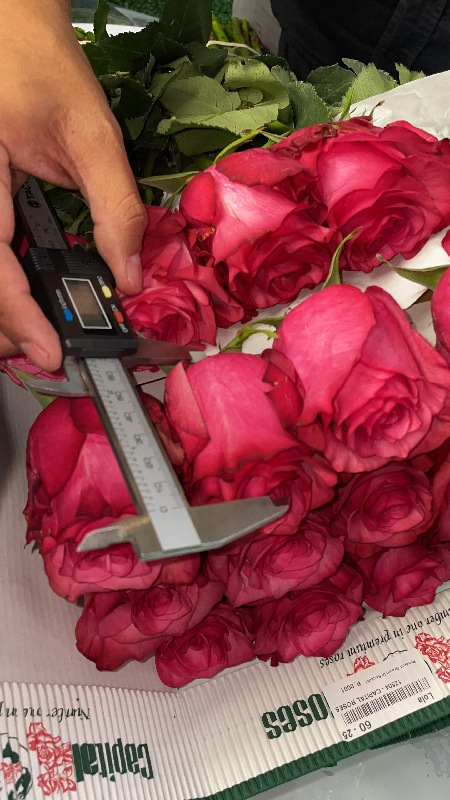
- Check 1. Stem length against the order Ecuadorian farms offer several grades, and some programs may include stems shorter than 50 cm. Common commercial increments can include:
- 50 or 60 cm for compact retail and mixed-bouquet programs.
- 70 cm for designs requiring a longer line.
- 100 cm for selected cultivars and tall installations, subject to current farm availability.
What it proves: A mismatch may indicate an order or grading issue, but stem length and thickness cannot prove or disprove Ecuadorian origin.
Check 2. Stem, thorn, and foliage condition
Assess the delivered cultivar against its specification, including:
- Stem strength and diameter appropriate to the ordered grade.
- Thorn pattern, which varies by cultivar and farm practice.
- Foliage condition including color, damage, dehydration, pests, or disease symptoms.
Do not use a comparison with local or Kenyan roses as an origin test; those characteristics also vary widely.
Check 3. Bloom condition and cultivar conformity
Compare the bloom with the approved variety, grade, and cut stage:
- Bloom firmness should be assessed without damaging the flower and in relation to the specified opening stage.
- Petal count varies by cultivar and is not a country-of-origin marker.
- Bloom form should match the cultivar description and current reference photos.
- Color and visible condition should be checked for off-color, spotting, Botrytis symptoms, bruising, or other defects.
Check 4. Packing and labels
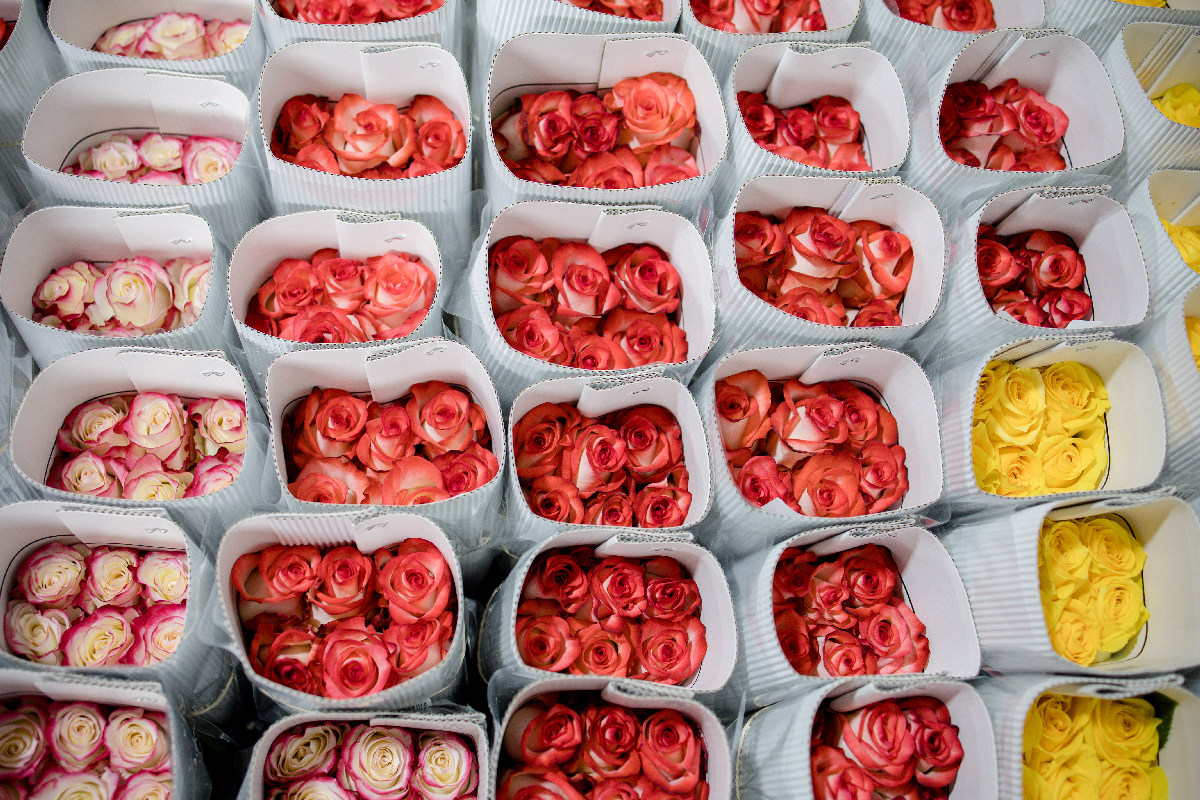
Ecuadorian roses may arrive in grower, exporter, or consolidator boxes. Traceable labels should normally identify or cross-reference:
- The grower or exporter name.
- The variety and color description.
- The stem-length grade.
- The declared pack count.
- A lot, barcode, or shipment reference.
Important: Neutral repacking can be legitimate during consolidation. Ask for the packing list and lot cross-reference rather than treating the box alone as proof of fraud.
Check 5. Trade and plant-health documents
The required set varies by destination, shipment, and importer. Relevant documents may include:
- Phytosanitary certificate confirming the plant-health inspection stated on the document; it is not a general quality or pesticide-residue certificate.
- Customs declaration where applicable, with the declared country of origin and commodity details required by the destination authority.
- Commercial invoice from the seller named in the transaction, with references that reconcile to the shipment.
Ask your importer or customs broker which documents must be available and how origin should be evidenced for the route.
Check 6. Receiving and vase-life performance
For the delivered lot:
- Record condition on arrival and run a controlled vase-life trial using a defined care protocol.
- Petal drop and Botrytis risk depend on cultivar, temperature history, sanitation, and care.
- Opening speed also varies by variety and cut stage.
Early wilting signals a quality or handling problem, but it does not establish the flower’s country of origin.
Check 7. Price and trade terms
There is no single global floor price for Ecuadorian roses. If an offer is materially below comparable quotes, review the grade, unit, pack, Incoterm, route, season, and payment terms before assuming it is equivalent. A discount is a reason for due diligence, not proof of counterfeit origin or a cold-chain breach.
Receiving checklist
Check Status Stem lengths and counts match the purchase specification + Stem, thorn, and foliage traits match the approved cultivar and grade + Blooms match the cut stage and visible-condition tolerance + Labels and packing records provide lot traceability + Phytosanitary certificate is present when required + Customs and trade documents reconcile to the declared Ecuadorian origin + Price, unit, Incoterm, and route match the confirmed offer +
Send us your requirements for a tailored year-round supply proposal

What clients say
Moscow Flowers
Floral studio
Distributor
KazakhstanChoose a consistent supply of premium Ecuadorian roses through farm-direct sourcing.



How your order reaches you
Ecualand coordinates wholesale flower sourcing and logistics for its clients.
What Ecualand covers
We source from partner farms, coordinate the pre-shipment quality checks and the export documentation, and fly the order to the airport agreed with you.
What you cover
You collect the order at that airport and arrange onward transport to your own warehouse. Import clearance, duties and taxes sit with you or with the agent you appoint.
- Amsterdam: consolidated departures on Tuesday, Wednesday, Friday and Sunday. The flight is direct. Orders start at one box.
- Direct flights to other airports: from 100 kg, which is roughly four to five boxes, or 1,200 to 1,500 stems.
- Lead time: at least one week, so the prepayment clears and the airfreight space is booked. For Valentine’s Day and International Women’s Day, order from December.
- Freight: can be included when the order flies with us; otherwise the buyer arranges and pays it.
- Payment: prepayment, quoted per order in US dollars.
Tell us which airport suits you and an account manager will confirm the route, the booking window and the current price list.